
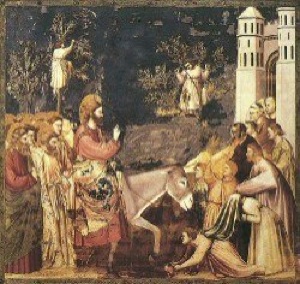
Giotto
James Tissot
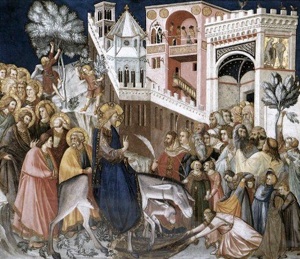
Pietro Lorenzetti
Entry into Jerusalem
Sunday, 17 April 2011
“Entry into Jerusalem” by the French illustrator and painter Edy-Legrand, (Édouard Leon Louis Warschawsky): 1882 - 1970.
In selecting an illustration for Palm Sunday, the main challenge simply has been how to find a suitable image. Surprisingly, there are very few from which to choose.
As we move through Holy Week, we’ll make changes to the artwork on the Welcome Page.

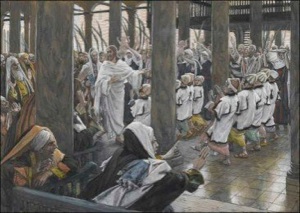
On Good Friday, the intention is to use Tissot’s paining, “What Our Saviour Saw from the Cross”. Tissot’s paintings illustrating Palm Sunday and Christ’s entry into Jerusalem seem very stiff by comparison.
Pietro Lorenzetti, the medieval Italian painter produced a sumptuous and triumphant painting - though Christ seems to be entering Siena clothed as a rich merchant or nobleman.
The theme of Father Ness’ homily on Palm Sunday was “The Contradiction of Calvary” or the self-emptying of Jesus. Here, Father Ness explored the concept of Jesus as the Servant-King, moving downwards through society - in stark contrast to the human tendency to aspire to be top dog.
Looking at the medieval and renaissance depictions of Jesus’ entry into Jerusalem, the tendency seems to be to paint a portrait in which Jesus might struggle to recognise himself. Perhaps, in the case of Giotto, this is as much to do with the power of patronage as with the artist’s vision.
In the last of this year’s ecumenical Lenten Studies, and with reference to Christ’s exit from rather than entry into Jerusalem, Father Denis McBride used an excerpt from Seamus Heaney’s poem, “Weighing In” to make a point.
And this is all the good tidings amount to:
The principle of bearing, bearing up
And bearing out, just having to
Balance the intolerable in others
Against our own having to abide
Whatever we’ve settled for and settled into
Against our better judgement. Passive
Suffering makes the world go round...
Prophesy who struck thee! When soldiers mocked
Blindfolded Jesus and he didn’t strike back
They were neither shamed nor edified, although
Something was made manifest - the power
Of power not exercised, of hope inferred
By the powerless forever.
“The power of power not exercised.” A theme for Holy Week, continued in the Mass on Monday morning with the reading from Isaiah 42: 1-7,
Behold my servant, whom I uphold, my chosen, in whom my soul delights; I have put my Spirit upon him, he will bring forth justice to the nations.
He will not cry or lift up his voice, or make it heard in the street;
a bruised reed he will not break, and a dimly burning wick he will not quench; he will faithfully bring forth justice.
The Servant-King gently begins to teach us the ways of humility - the power of power not exercised.